General
How Smart Gas Infrastructure Will Revolutionize the Middle East Utility Market

Vinay Saka
Operations
The Next Frontier of Smart Cities Is Underground
When people think about smart cities, they often imagine autonomous transportation, AI-powered services, and connected buildings. Yet one of the most significant transformations happening across the Middle East is taking place beneath the surface, within the utility infrastructure that powers homes, businesses, and entire cities.
Gas utilities remain a critical component of urban infrastructure across the GCC. However, much of the region's gas network still relies on legacy systems that offer limited visibility, manual processes, and fragmented operational management.
As governments across the UAE, Saudi Arabia, Qatar, and the wider GCC accelerate smart city initiatives, the digitization of gas infrastructure is becoming a strategic priority.
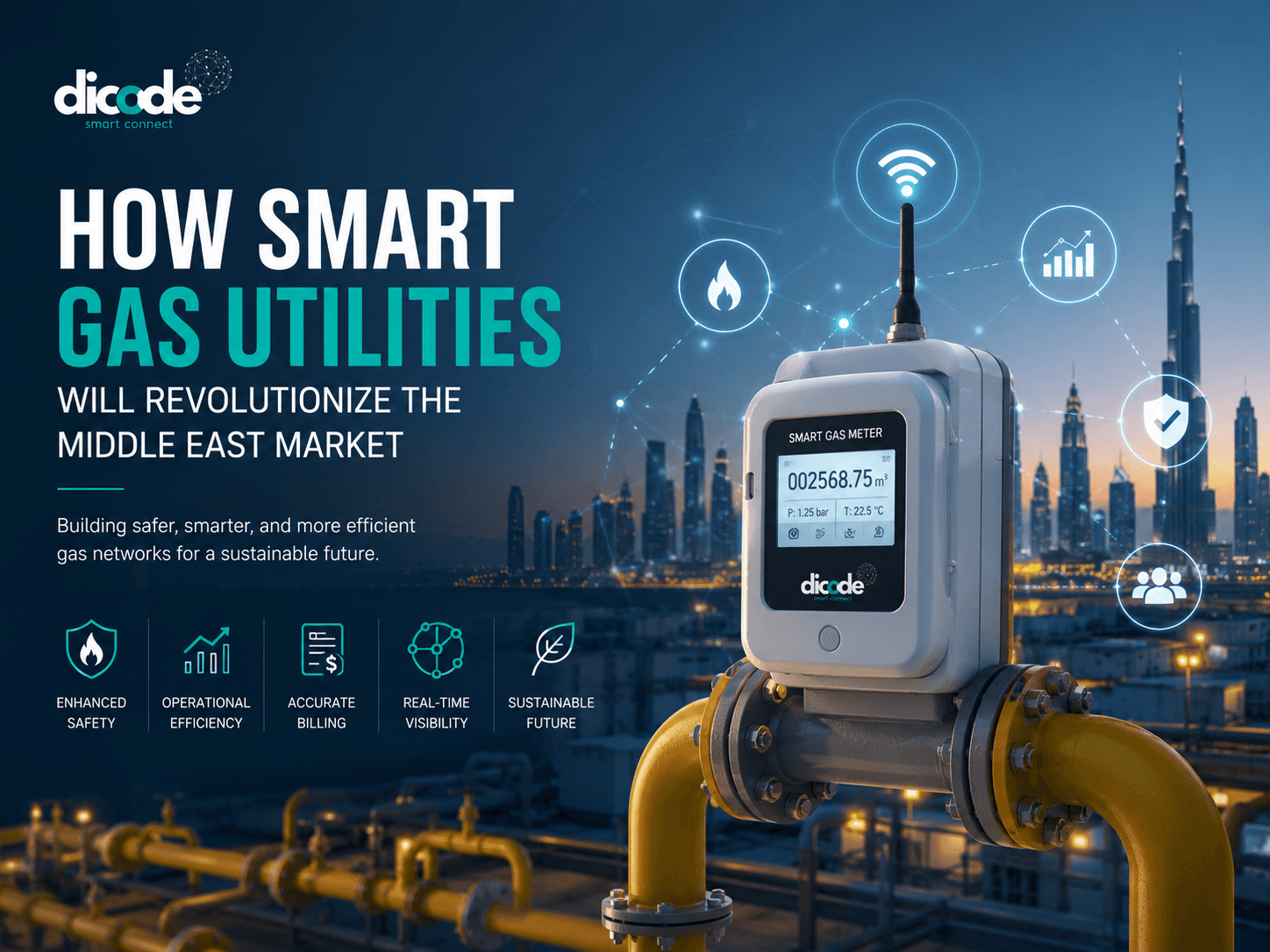
Smart gas infrastructure represents the convergence of IoT, connectivity, real-time analytics, and operational intelligence, enabling utility providers to transform how gas networks are monitored, managed, and optimized.
The Challenges Facing Traditional Gas Infrastructure
For decades, gas utilities have operated using largely analogue systems.
This approach creates several operational challenges:
Manual meter reading processes
Delayed leak detection
Limited infrastructure visibility
Inefficient billing cycles
High maintenance costs
Reactive operational management
Fragmented data systems
As cities continue to expand and utility networks become more complex, these challenges become increasingly difficult to manage.
Infrastructure operators require real-time intelligence rather than periodic reporting.
They need connected ecosystems rather than isolated systems.
What Is Smart Gas Infrastructure?
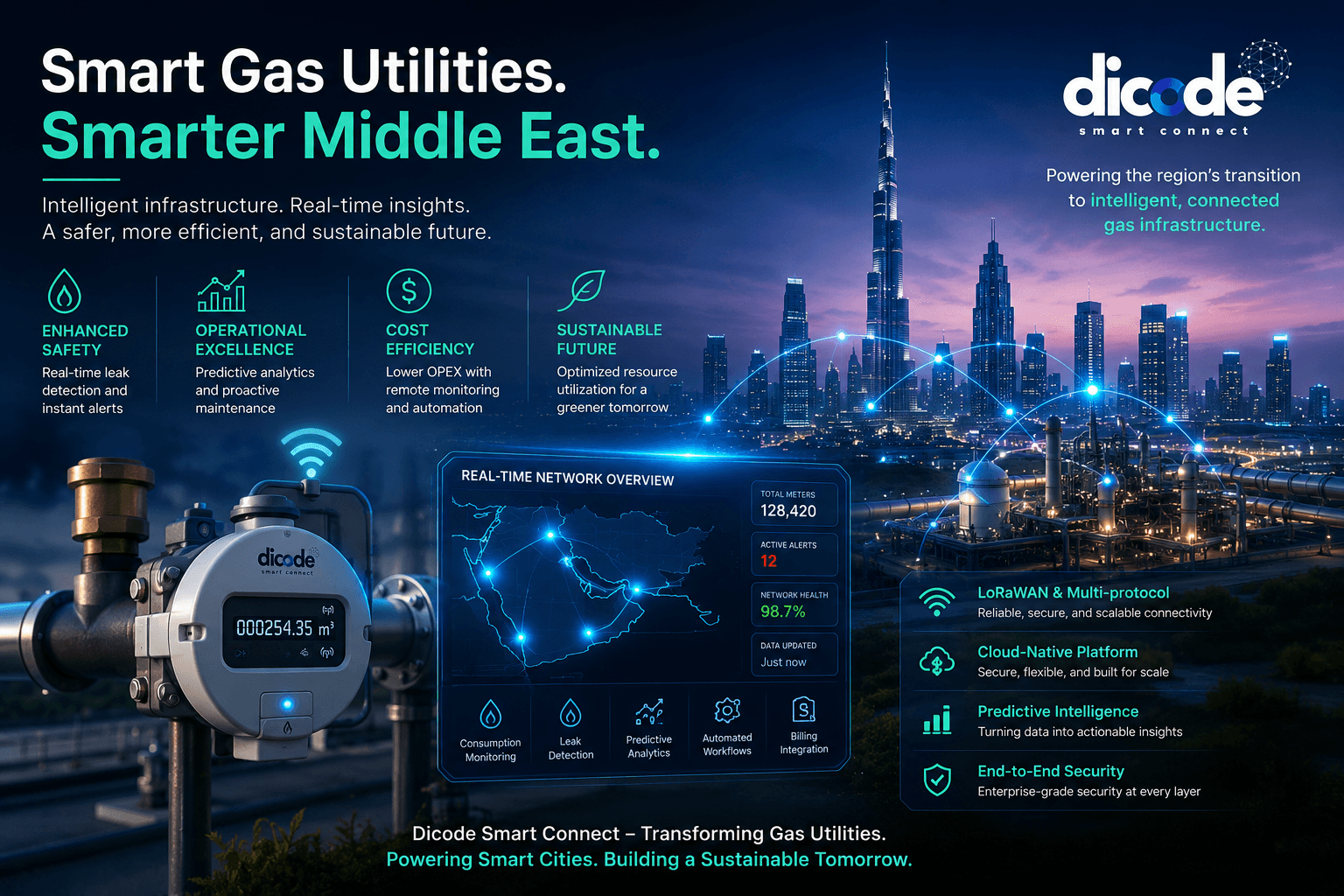
Smart gas infrastructure integrates intelligent metering devices, secure connectivity networks, cloud-based software platforms, and predictive analytics into a single operational ecosystem.
Unlike traditional utility systems, smart infrastructure continuously collects and analyzes data across the network.
This enables:
Real-time consumption monitoring
Automated meter readings
Predictive maintenance
Leak detection and safety alerts
Remote infrastructure management
Integrated billing systems
Operational analytics and reporting
The result is a more efficient, safer, and scalable utility environment.
Why the GCC Is Positioned for Rapid Adoption
The Middle East is uniquely positioned to become a global leader in utility digitization.
Governments throughout the region continue investing heavily in:
Smart city development
Digital transformation initiatives
Infrastructure modernization
Sustainability goals
Connected utility ecosystems
Dubai's vision for a fully connected future has accelerated innovation across the utility sector, creating an ideal environment for advanced infrastructure technologies.
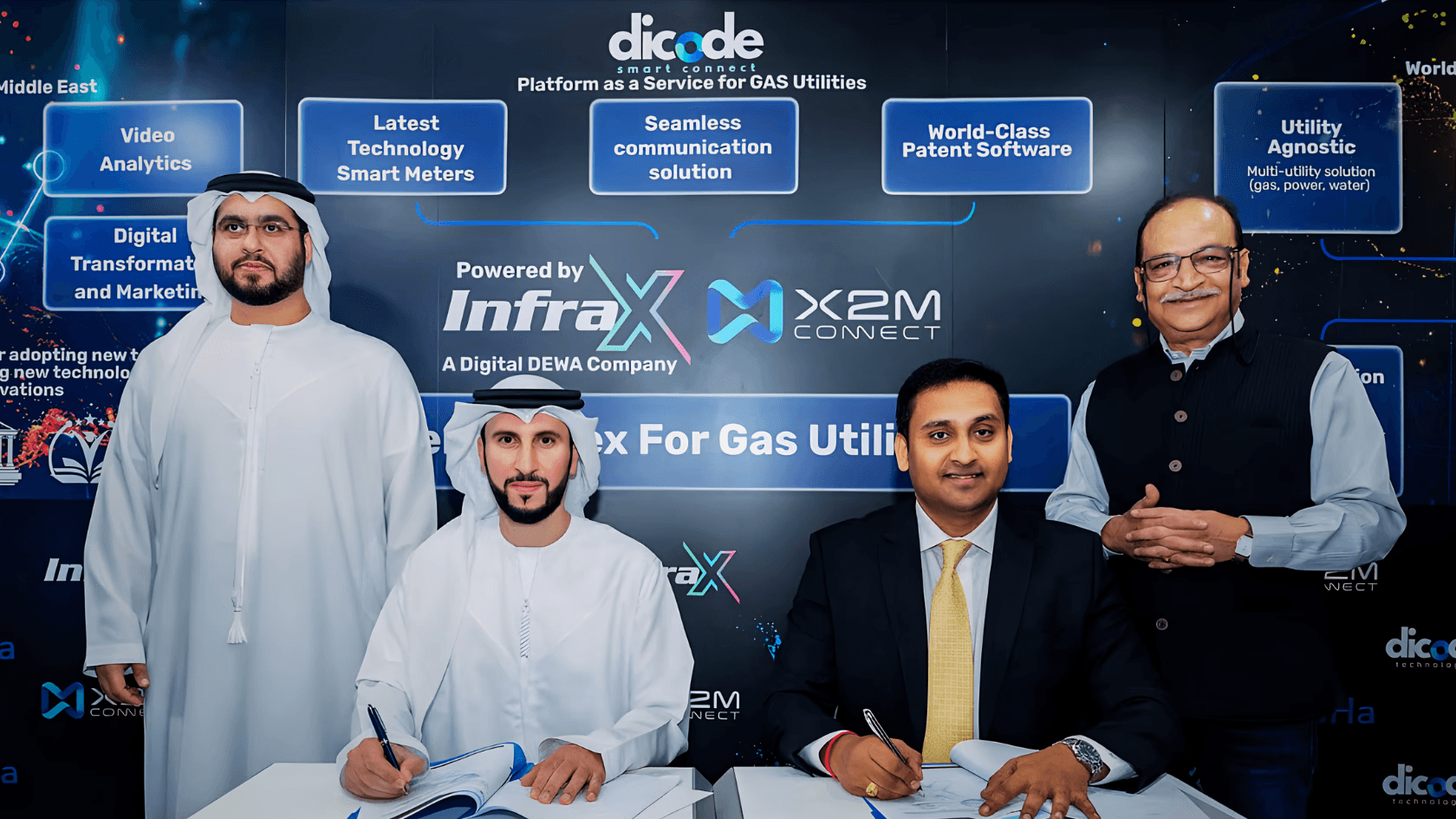
Organizations such as Digital DEWA are actively driving digital transformation across utility infrastructure, creating the foundation for next-generation smart utility ecosystems.
This shift is creating significant opportunities for smart gas deployment across residential communities, commercial developments, industrial facilities, and large-scale infrastructure projects.
The Role of Connectivity in Smart Gas Networks
Smart infrastructure is only as effective as the network connecting it.
Reliable communication between devices, meters, sensors, and operational platforms is essential.
Modern utility environments increasingly rely on technologies such as LoRaWAN, which provides:
Long-range communication
Low-power operation
High scalability
Secure data transmission
Cost-efficient deployment
This connectivity layer enables utility operators to access real-time information across thousands of connected devices simultaneously.
As smart city ecosystems continue to expand, utility-grade connectivity will become one of the most valuable infrastructure assets in the region.
From Data Collection to Infrastructure Intelligence
The true value of smart gas infrastructure lies not in data collection but in actionable intelligence.
Advanced utility platforms transform operational data into insights that help infrastructure operators:
Predict failures before they occur
Improve safety performance
Reduce operational costs
Optimize maintenance schedules
Enhance customer service
Improve network efficiency
This shift from reactive management to predictive infrastructure intelligence represents one of the most important developments in modern utility operations.
Globally proven platforms such as X2M Connect are already demonstrating how IoT-driven utility ecosystems can provide real-time operational visibility across large-scale infrastructure environments.
Why the OpEx Model Is Accelerating Adoption
Historically, one of the biggest barriers to utility modernization has been capital expenditure.
Large-scale infrastructure projects often require substantial upfront investment, slowing adoption and increasing financial risk.
Today, Platform-as-a-Service models are changing that equation.
Instead of purchasing and deploying infrastructure outright, utilities can access complete smart utility ecosystems through operational expenditure models.
This approach provides:
Faster deployment
Lower financial risk
Reduced upfront investment
Easier scalability
Continuous platform improvements
Long-term operational support
For many utility providers, this model removes one of the largest obstacles to digital transformation.
The Future of Smart Gas Infrastructure in the Middle East
Over the next decade, smart gas infrastructure is expected to become a standard component of urban utility ecosystems across the GCC.
Connected meters, predictive analytics, secure connectivity networks, and intelligent operational platforms will enable cities to manage infrastructure with unprecedented efficiency and visibility.
As governments continue investing in smart city initiatives and infrastructure modernization, utility operators that embrace digital transformation today will be better positioned to meet future demands.
The future of utility infrastructure is no longer about monitoring assets.
It is about creating intelligent ecosystems capable of learning, adapting, and optimizing in real time.
How Dicode Smart Connect Is Supporting This Transformation
Dicode Smart Connect was created to address the growing need for intelligent gas infrastructure across the Middle East. Built specifically for GCC utility environments, the platform combines smart metering, utility-grade connectivity, predictive analytics, and operational intelligence into a unified Platform-as-a-Service ecosystem.
Through strategic collaboration with global technology partners, including X2M Connect and infrastructure initiatives associated with Digital DEWA, Dicode Smart Connect helps utilities modernize legacy systems while reducing upfront investment requirements and accelerating infrastructure digitization.
As the region continues its smart infrastructure transformation, intelligent gas networks will play a critical role in shaping safer, more efficient, and more connected cities across the Middle East.
Vinay Saka
Operations